.png)
How to Move a Couch Through a Tight Space Without Damaging It or Your Home
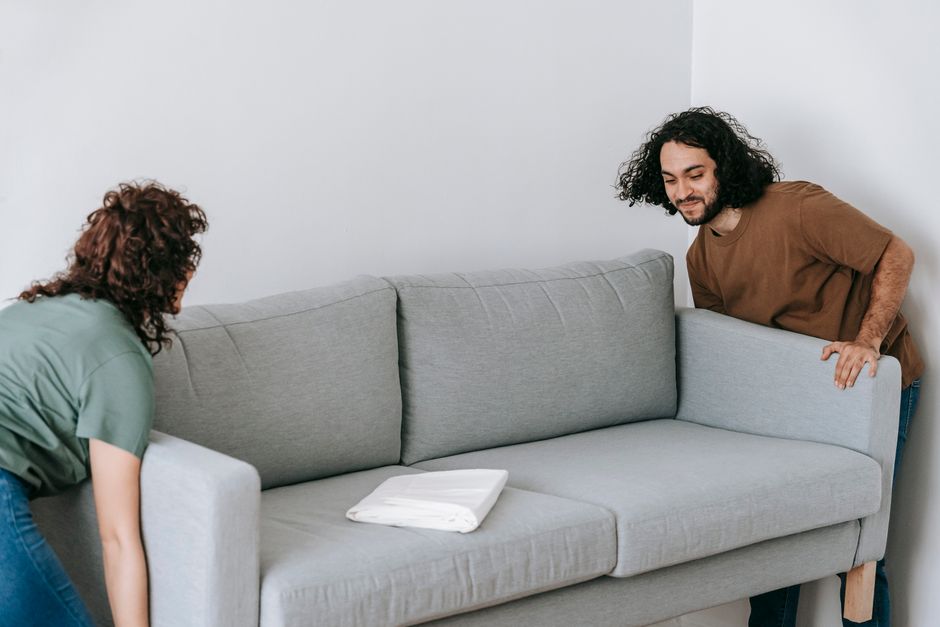
Knowing how to move a couch through a tight space is one of the most practical skills you can have on moving day. A sofa is almost always the heaviest, most unwieldy piece of furniture in any home, and it is almost always the one that gets stuck in a doorway, scrapes a wall, or refuses to round a corner. Getting it right requires a clear plan before you ever lift a cushion — not a trial-and-error process that damages your walls, floors, and the couch itself.
Need a professional team to handle the heavy lifting? Call Cullen Moving and Storage LLC at 1 (215) 327-9733 — we move sofas, sectionals, and oversized furniture every day without a scratch.
Most people underestimate how much problem-solving a couch move demands. Unlike boxes, a sofa cannot simply be carried in a straight line — it has to be angled, pivoted, tipped, and sometimes partially disassembled before it will clear a doorframe. The good news is that with the right preparation, the right helpers, and a basic understanding of the techniques professionals use, you can move almost any couch through almost any space without causing damage.
Measure Everything Before You Try to Move Anything
The single most avoidable mistake people make when moving a couch is skipping the measurement step. Carrying a 90-inch sectional to a 32-inch doorway and discovering it will not fit is a situation that costs real time and energy. Take measurements first — every time, no exceptions.
Measure the Couch Itself
Get the total length, height, and depth of the sofa. Depth is the dimension most people forget, and it is often the one that causes problems in a narrow hallway. If the couch has removable cushions or legs, note those as separate measurements — a sofa that is 38 inches tall with legs may clear a doorframe at 36 inches once the legs are unscrewed. Write your numbers down and bring them with you as you walk the route.
Measure Every Obstacle on the Route
Walk from where the couch currently sits to where the moving truck will be parked, and measure every potential pinch point along the way:
- Doorway width — measure between the door stop molding, not the rough opening. The usable width is usually two to three inches narrower than it looks.
- Doorway height — relevant if you plan to tip the couch vertically to maneuver it through.
- Hallway width — a couch does not travel in a straight line through a hallway; it has to enter at an angle, so the effective clearance is less than the hallway measurement alone suggests.
- Stairwell width and landing depth — if stairs are involved, the landing at the top or bottom is often the tightest constraint.
- Elevator interior dimensions — if you live in a building with an elevator, verify the cab size before assuming a large sofa will fit.
Once you have every measurement, compare them against your couch dimensions and identify the tightest point. That is where you will spend the most problem-solving effort before moving day.
Prepare the Couch Before You Lift It
A little preparation before the move dramatically reduces both physical effort and the risk of damage. Most professional movers spend several minutes prepping a sofa before it ever leaves its spot on the floor.
Remove Legs, Cushions, and Removable Parts
Couch legs almost always unscrew with a simple turn or a single bolt underneath. Removing them reduces the overall height by three to six inches and eliminates one of the most common causes of doorframe scuffs. Set the legs aside in a labeled bag or wrap them in a moving blanket so they do not get lost.
Remove all cushions and pillows. This reduces weight, makes the frame easier to grip, and — in some cases — reveals a zippered base that can be separated from the frame, reducing bulk further. Check whether your sofa has a reversible or removable back section; some modern modular sofas are designed to come apart specifically for this situation.
Wrap the Frame for Protection
Before you carry the couch anywhere, wrap exposed corners and the entire fabric surface in moving blankets or furniture pads, secured with stretch wrap or furniture straps. This protects the upholstery from scuffs and the fabric from snagging on door hardware. It also gives you a better grip on the surface, which matters when you are navigating a corner at shoulder height.
Use Furniture Sliders on Hard Floors
If any part of your route is across hardwood, tile, or laminate flooring, place furniture sliders under the couch legs or corners. Sliders reduce friction dramatically and allow two people to glide a heavy sofa across the room without scratching the floor or straining their backs. Remove the sliders before you attempt to carry the couch over thresholds or stairs.
The Key Technique: the "Couch Shuffle" and the Pivot Method
Professional movers use two primary techniques to get a couch through a tight space — the vertical tilt method and the pivot-and-push method. The right choice depends on your specific measurements.
Vertical Tilt Method
If your doorway height is greater than the couch's depth, you may be able to stand the sofa on one end — literally tipping it vertically — and walk it through the doorframe. This works particularly well with standard sofas in apartments where doorways are tall but narrow. One person guides the top end, the other supports the bottom, and you shuffle through the opening in a controlled motion. This is often called the "sofa on its end" technique, and it is one of the most reliable approaches for a standard rectangular sofa.
Pivot-and-Push Method
For L-shaped sectionals or sofas too tall to tip, the pivot method is the standard approach. Carry the couch to the doorway at an angle — roughly 45 degrees relative to the opening — lead one end through first, then pivot the rear end in an arc around the doorframe edge. This technique requires clear communication between helpers. One person handles the end that goes through first and acts as the guide; the other manages the far end and follows the pivot arc. Moving slowly and stopping to reassess at any point of resistance is far safer than forcing momentum.
Navigating Stairways
Stairs introduce a vertical challenge that multiplies the risk significantly. The person at the bottom carries the heavier load and controls the pace; the person at the top guides direction and prevents the sofa from swinging. Always move the couch with the heaviest end leading down the stairs — never let the heavy end trail above, where it is difficult to control. On landings, use a combination of tipping and pivoting, the same principles that apply at doorways. If the stairwell is extremely tight, consider whether the couch can be carried over a balcony or through a window — in some urban row homes and apartment buildings, this is genuinely the most practical option.
When to Call in Professionals — and What to Expect
There is a point at which the dimensions simply do not work, the weight is beyond what two or three helpers can safely manage, or the risk of damage to a high-value piece of furniture or a newly finished home is too great. Recognizing that point before the move — rather than during it — is a sign of good judgment, not defeat.
Professional movers bring equipment that most homeowners do not own: furniture dollies, forearm forklifts, stair rollers, and the practiced intuition that comes from solving these problems hundreds of times. They also carry liability coverage, which means that if something does get damaged, there is a clear recourse. If your sofa is heavy, oversized, antique, or custom-upholstered, the cost of a professional move is almost always less than the cost of repairing damage done by an improvised attempt.
When you hire a moving team, tell them in advance about any challenging access points — tight stairwells, elevator limitations, narrow hallways, or parking restrictions. The more information they have before arriving, the better prepared they will be, and the faster the move will go.
Protecting Your Home During the Move
Moving a large piece of furniture through a home is as much about protecting the home as it is about protecting the furniture. A single poorly managed corner can gouge a baseboard, crack drywall, or scratch a hardwood floor in a way that costs hundreds of dollars to repair.
- Use door frame protectors — foam or cardboard corner guards taped to the door jamb prevent the most common type of damage when pivoting through a doorway.
- Lay down floor runners — carpet runners or reusable floor protection pads guard hardwood and tile from foot traffic and dragging.
- Remove doors from hinges when needed — this is a five-minute task that can add up to four inches of usable clearance in a doorway, often making the difference between a sofa that fits and one that does not.
- Keep the path clear — remove rugs, art, decorative items, and anything else from the route before you start carrying. A trip hazard during a sofa carry is a serious safety risk.
Taking fifteen minutes to set up proper floor and wall protection before the move begins is one of the highest-return investments you can make on moving day. It is also a standard practice of every professional moving crew worth hiring.