.png)
How to Move Paintings and Framed Art Without Cracking, Scratching, or Warping Them
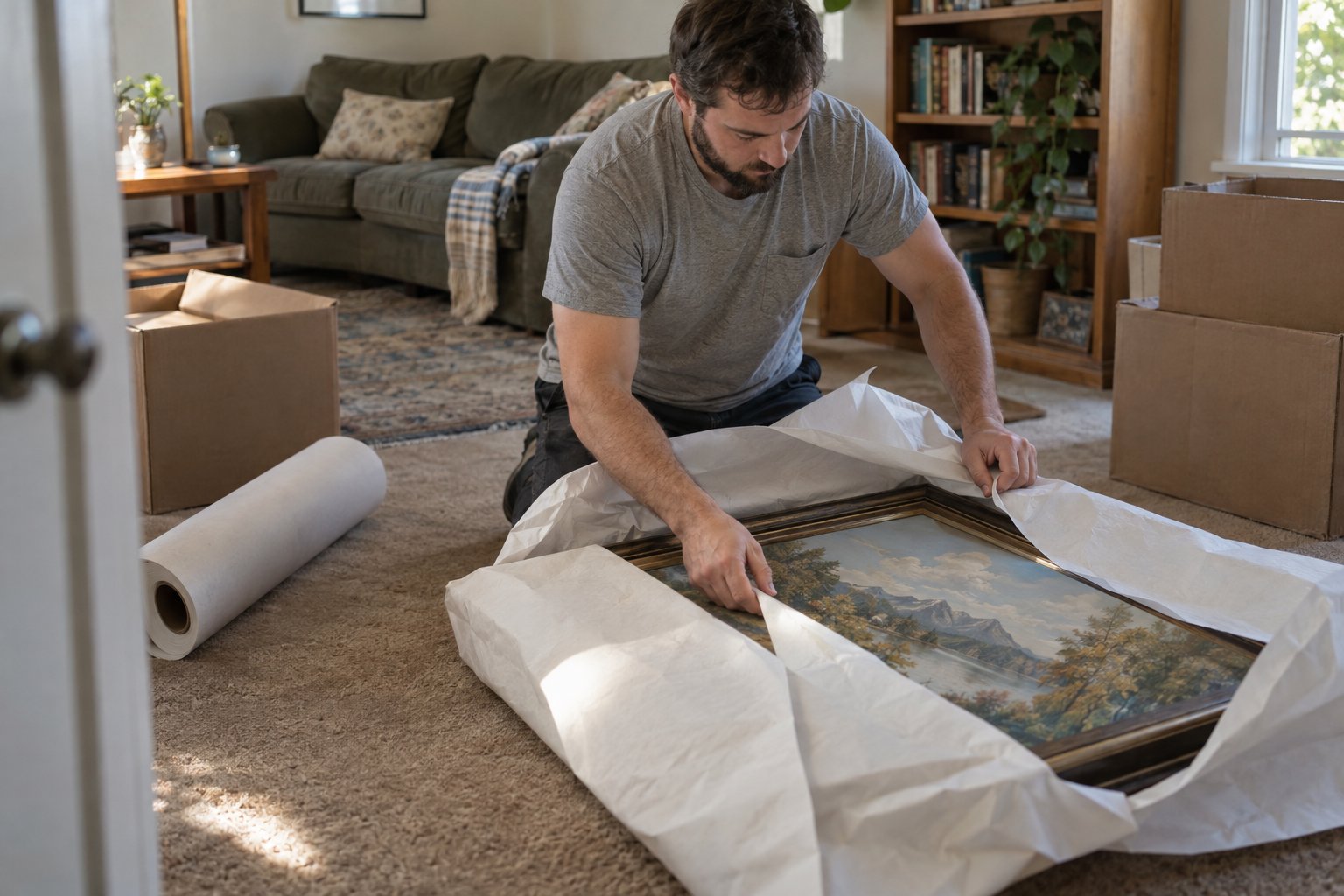
The safest way to move paintings is to take them off the wall yourself before movers arrive, wrap each piece so nothing touches the painted surface directly, and transport them upright rather than flat. Canvases, framed prints, and anything behind glass all need slightly different handling, but the core risks are the same: punctures, cracked glass, warped frames, and corners that get crushed under other boxes.
Artwork is one of those items people forget to plan for until moving day is already underway. It doesn't fit neatly in a box, it's often irreplaceable, and a single mistake in the truck can ruin something that took years to collect. Here's how to move paintings the way professionals do it, whether you're relocating one framed print or an entire wall of canvases.
Should You Take Paintings Off the Wall Before Movers Arrive?
Yes. Take paintings and framed art down yourself before your moving crew arrives, ideally a day or two ahead of time. This protects the art from being knocked loose during furniture moving, and it lets you inspect each piece and choose the right wrapping before the rush of moving day.
Removing art early also gives you time to patch and touch up nail holes, decide which pieces travel with you personally versus in the truck, and set anything especially valuable aside so it doesn't get mixed in with general boxes. If a mover arrives to find art still hanging, it usually gets handled fast and under time pressure, which is exactly when corners get bumped and glass gets chipped. If you're already working through a broader move planning checklist, add artwork removal as its own line item rather than folding it into general packing.
How to Pack Canvas Paintings for Moving
Unframed or lightly framed canvases need protection from punctures and pressure more than anything else. The paint surface can dent or crack if something presses against it, even softly, for the length of a move.
- Cover the surface first. Lay a sheet of glassine or acid-free paper directly over the painted face before adding any other wrapping. Regular paper or plastic can stick to fresh or textured paint.
- Protect the corners. Cardboard corner protectors (or foam cut into L-shapes) stop the frame edges from taking the impact if the piece gets bumped.
- Wrap with cardboard, not just blankets. A flat sheet of cardboard on each side, taped at the edges (never taped to the painting itself), keeps the canvas rigid so it can't flex or bow during transport.
- Use a picture box for anything large. Telescoping picture boxes let you size the box to the painting and add packing paper in the gaps so nothing shifts.
How to Transport Large Canvas Paintings and Oversized Frames
Oversized paintings are handled differently than smaller ones mainly because of weight distribution and how they're loaded into the truck. A large canvas can't be treated like a normal box; it needs its own space and its own orientation.
For pieces too big for a standard picture box, custom crating is worth the extra step, especially for anything with real value or a delicate surface like an oil painting that hasn't fully cured. A plywood crate with foam blocking on the interior keeps the piece rigid and isolated from vibration. If crating isn't practical, sandwich the painting between two pieces of stiff cardboard slightly larger than the frame, secure with tape on the cardboard (not the art), and label clearly which side faces up.
Always load large paintings on their edge, never flat. Stacking anything flat on top of a painting, even lightly, can crack canvas or bow a frame over the length of a move. Position them against a wall of the truck where they're braced on both sides and won't shift when the truck turns or brakes. This is one reason load order matters so much on moving day: fragile, upright items need their own protected zone, not a spot wherever there happens to be room left.
Protecting Glass-Framed Art and Prints
Glass adds a second failure point that canvas doesn't have: it can crack from pressure and cut the artwork behind it if it shatters. Framed prints and photos behind glass need extra attention at the glass itself, not just the frame.
Apply painter's tape in an X or grid pattern across the glass before wrapping. This won't stop the glass from breaking under serious impact, but it keeps shards together if it does crack, which protects both the print underneath and anyone unpacking the box later. Wrap the frame in packing paper, then bubble wrap with the bubbles facing out, then a final layer of cardboard. Mark the box "glass, this side up" on more than one side, since boxes get rotated in transit more often than people expect.
Loading and Labeling Artwork in the Truck
Paintings and framed art should be among the last items loaded and among the first unloaded, which keeps them out of the way of heavier furniture and reduces how long they sit crammed against other items. Where they end up in the truck matters as much as how they're wrapped, and it's a detail worth discussing with your local moving crew before the truck is packed rather than after.
Group all artwork together in one area, ideally in a spot where nothing can be stacked on top of it. Standing pieces upright and secured with a strap or wedged between soft furniture (never metal or hard-edged items) keeps them from sliding when the truck moves. Label every piece with the room it's going to and a note like "fragile, upright only" so it's obvious at a glance during unloading, not just to your crew but to anyone helping carry things into the new place.
If you're moving a large collection or several oversized pieces, it's worth asking your moving company about their fragile-item handling ahead of time rather than assuming standard packing materials will cover it. Some pieces, particularly anything with sentimental or appraised value, may be worth transporting separately in a climate-controlled vehicle rather than a general moving truck. Our guide to packing fragile items safely for storage covers the padding and box-selection basics that apply to art alongside glassware and other delicate belongings.
Once you know how your collection will be packed and loaded, get a moving quote so your crew can plan the right materials and truck space in advance.