.png)
How to Protect Canvas Paintings and Framed Art When Moving
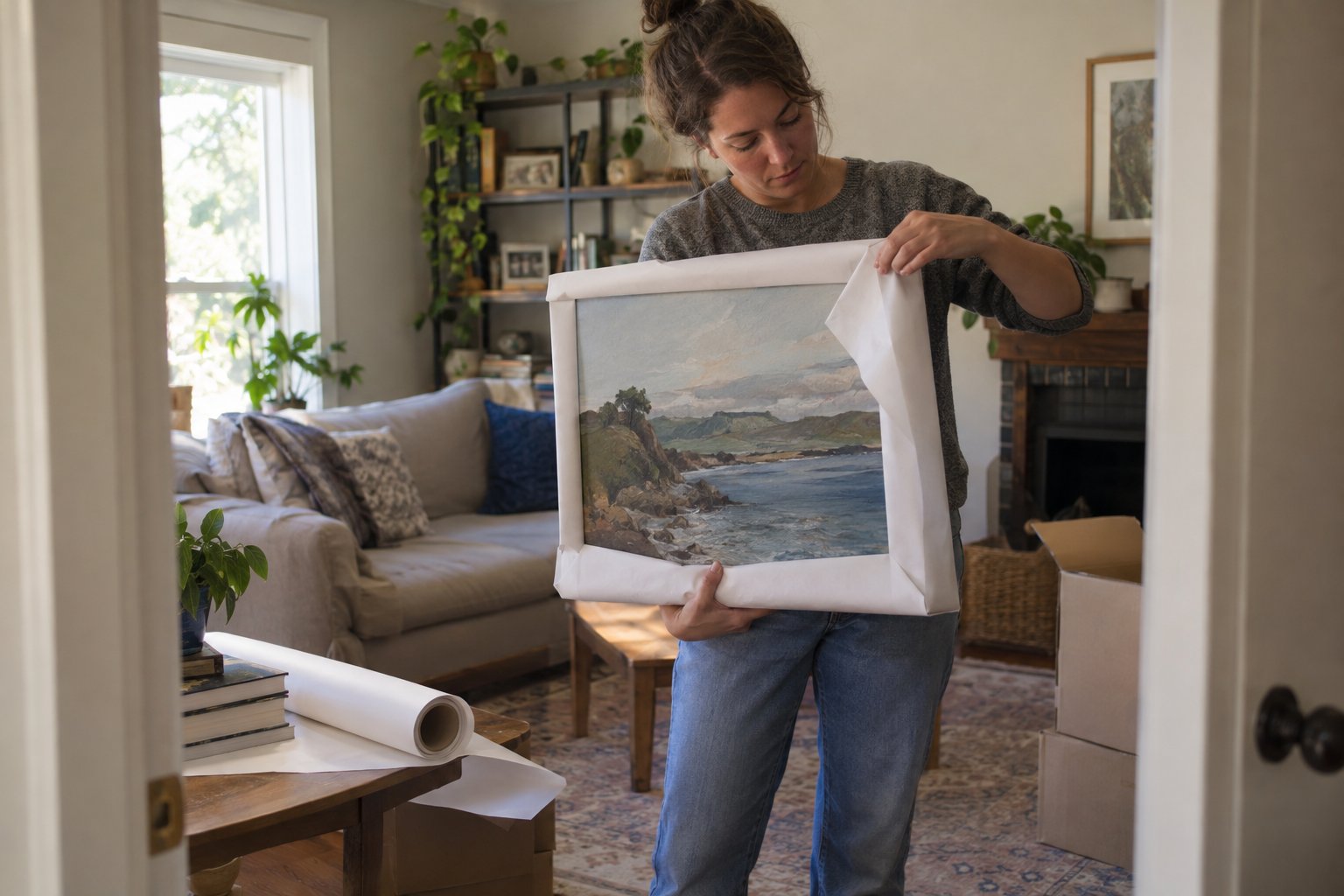
Canvas paintings need different protection than framed prints under glass because the canvas surface itself can stretch, crack, or dent if it takes direct pressure anywhere but the edges. The fix is simple once you know it: keep weight off the painted surface, protect the corners first, and never let plastic touch the paint directly. Get those three things right and a canvas will survive a move in the same condition it left your wall.
If you already have a framed piece under glass, our guide on how to move paintings and framed art covers glazing and glass-specific risks in depth. This piece focuses on what makes an unframed or canvas-mounted painting different, and how to pack and transport one without damaging the surface.
Why Does Canvas Need Different Protection Than Framed Art?
Canvas is a stretched fabric surface, not a rigid pane, so it reacts to pressure, humidity, and temperature differently than glass-covered art. A glass frame distributes pressure evenly across a hard surface. A canvas does not: push on the center and it can stretch or dent the fabric against the wooden stretcher bars behind it, sometimes permanently.
Temperature and humidity swings matter more for canvas, too. Oil and acrylic paint can become brittle in cold trucks and tacky in heat, which makes surface contact during transit riskier than it would be for a sealed, framed piece. That's why the wrapping approach below avoids any direct contact between packing material and the painted surface, using corner protection and rigid support instead.
What Materials Do You Need to Pack a Canvas Painting?
You need acid-free glassine paper, cardboard corner protectors, a rigid flat panel slightly larger than the canvas, and a mirror or picture box sized to fit. Skip bubble wrap directly on the paint, and skip regular packing paper, which can leave marks or stick to a tacky surface over time.
Here's what each piece does:
- Glassine paper: A smooth, low-acid paper that won't stick to paint even if the canvas hasn't fully cured. Lay this directly against the painted surface before anything else touches it.
- Corner protectors: Cardboard or foam guards that slide over each corner of the frame or stretcher bars. Corners take the brunt of impact in transit, so this is the single most important piece of protection.
- A rigid flat panel: A sheet of cardboard or foam board cut slightly larger than the canvas, placed on the front after the glassine layer, so nothing can press into the surface from outside.
- A picture or mirror box: A flat, rigid shipping box designed for art. It keeps the painting from flexing or bowing during the move, which a standard moving box cannot do.
How Do You Wrap a Canvas Painting Step by Step?
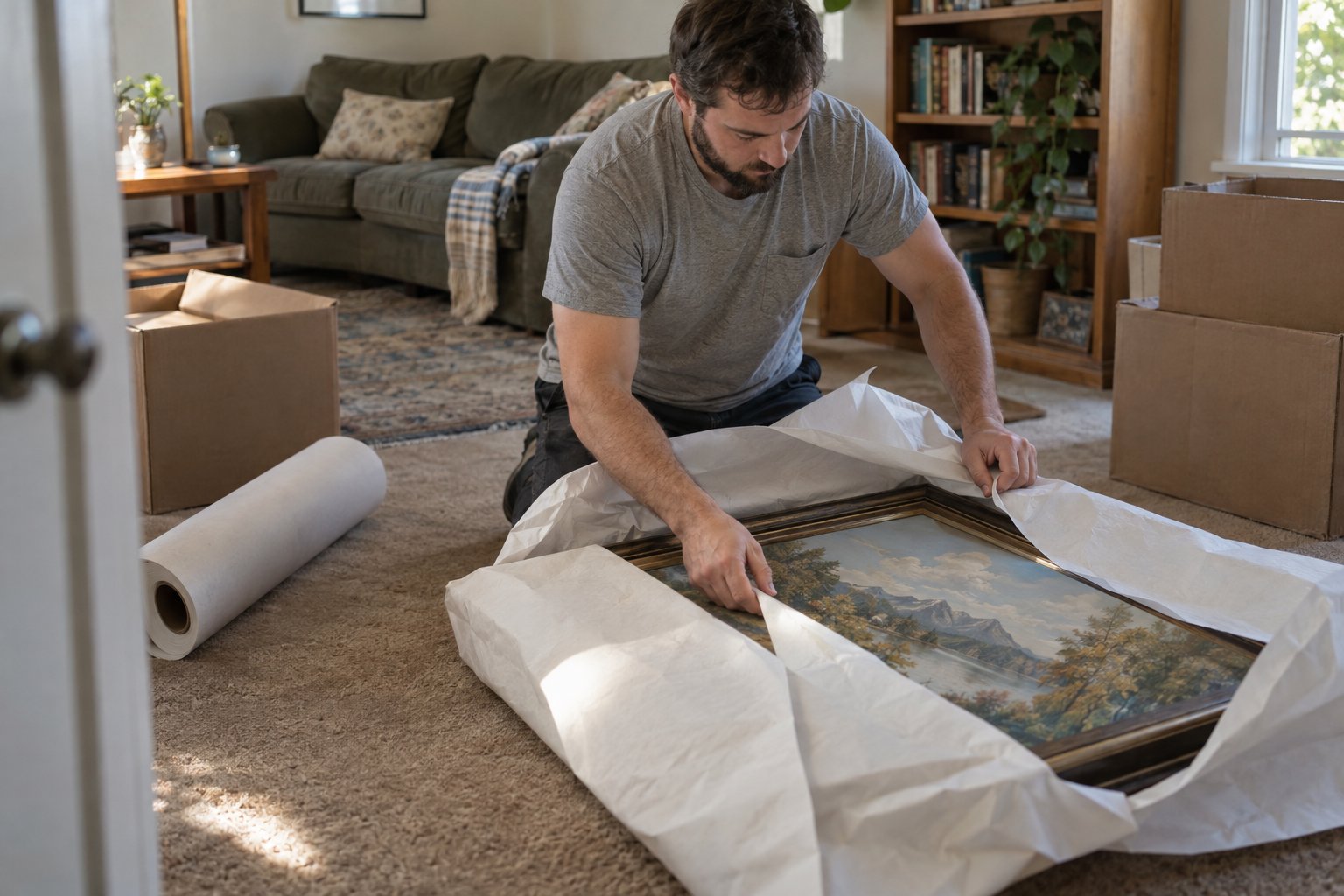
Lay the glassine paper over the painted face first, add corner protectors, then sandwich the whole piece between two rigid panels before boxing it. This order matters because each layer protects against a different type of damage, from surface contact to corner impact to overall flexing.
- Lay a sheet of glassine paper over the entire painted surface, with enough overhang to fold around the edges.
- Slide cardboard corner protectors onto all four corners of the frame or stretcher bars.
- Place a rigid panel against the front (over the glassine) and another against the back, so the canvas is sandwiched between two flat, stiff surfaces.
- Wrap the sandwiched painting in a single layer of bubble wrap, bubbles facing out, taped only to itself, never to the frame or canvas.
- Slide the wrapped painting into a properly sized picture or mirror box, filling any gaps with crumpled paper so it can't shift inside the box.
- Label the box "fragile" and mark which side is up, since canvases should always travel vertically, never flat.
How Should Canvas Paintings Be Loaded and Transported?
Canvas paintings should always travel upright and braced, never stacked flat with weight on top. Flat stacking is the single most common cause of canvas damage during a move, since even light pressure across the center can dent or stretch the fabric over time.
Position boxed paintings on their edge, wedged between soft items like mattresses or cushions rather than hard furniture. Avoid placing anything directly against the truck wall where vibration is strongest, and keep paintings away from the very back or very front of the truck where sudden stops transfer the most force. If you're hiring help for a local move, mention upfront that you have art requiring upright transport so the crew can plan the load accordingly.
What If You're Moving a Painting Long Distance?
Long-distance moves add time and temperature exposure that local moves don't, so canvas art needs extra climate consideration on top of the wrapping steps above. A painting sitting in a truck for several days faces more humidity swings and temperature extremes than one that's loaded and unloaded the same afternoon.
If your move involves multiple days in transit, ask about climate-aware placement in the truck and avoid packing canvases near the doors, where temperature swings are most extreme. For a full breakdown of how long-distance logistics differ from a local move, see our guide on local vs. long-distance moving differences. A moving quote request is also a good time to flag any art or fragile pieces so they're accounted for in the plan from the start.
Common Mistakes That Damage Canvas Paintings in Transit
The most frequent mistakes are stacking other items on top of a flat-laid canvas, using regular packing paper or plastic wrap directly on the paint, and skipping corner protection because the painting "looks sturdy." Any one of these can cause damage that isn't visible until the painting is unwrapped at the new home.
Another overlooked issue is leaving a painting in a hot car or truck cab rather than the climate-buffered cargo area. Direct sun through a windshield can heat a painting far faster than the ambient temperature outside, which is enough to soften paint and attract dust or debris to the tacky surface.
Final Thoughts on Moving Canvas Art Safely
Canvas paintings aren't fragile in the same way glass is, but they're vulnerable in their own way: surface pressure, corner impact, and temperature swings all do damage that's hard to reverse. Glassine paper, corner protectors, rigid panels, and upright transport cover the main risks, and a little extra planning for long-distance moves covers the rest.