.png)
Should I Take My Paintings Off the Wall Before Movers Arrive?

Yes, take your paintings and framed art off the wall before your movers arrive. Most moving crews expect walls to be cleared ahead of time, and leaving artwork hanging can slow down the crew, add to your bill if you're paying hourly, and put your pieces at higher risk of getting knocked during the loading process. A few minutes of prep the night before saves a lot of hassle on moving day itself.
That said, "take it down" is only step one. What you do with the piece after it's off the wall, and when you actually schedule that task relative to your movers showing up, makes the difference between a frame that survives the move and one that doesn't. Here's how to think about the timing and the handoff.
Why Movers Expect Walls Already Cleared
Professional crews are hired to pack boxes, protect furniture, and load the truck efficiently, not to spend time unhooking dozens of individual nails and wall anchors. Most moving companies state this in their pre-move instructions, and it's one of the most commonly overlooked items on a to-do list.
If your crew arrives and finds a wall full of hanging art, one of two things happens. Either they start taking it down themselves, which eats into the time you're paying for, or they ask you to do it on the spot while the rest of the crew waits. Neither is ideal. Clearing walls yourself the day before (or first thing moving morning, well before the truck arrives) keeps the crew moving through the house instead of standing around.
What Time Should You Have This Done By?
Aim to have everything off the walls before your scheduled arrival window, not during it. Most movers arrive within a set morning or early-afternoon window rather than at an exact minute, so plan to finish wall prep the evening before if your move is scheduled early.
If you're unsure of your crew's arrival time, call your moving company a day ahead to confirm the window. Treat that confirmed time as your deadline for having every frame down, wrapped, and grouped in one area, ready for the crew to pack directly into the truck or into protective cartons.
Should You Pack the Art Yourself or Let Movers Handle It?
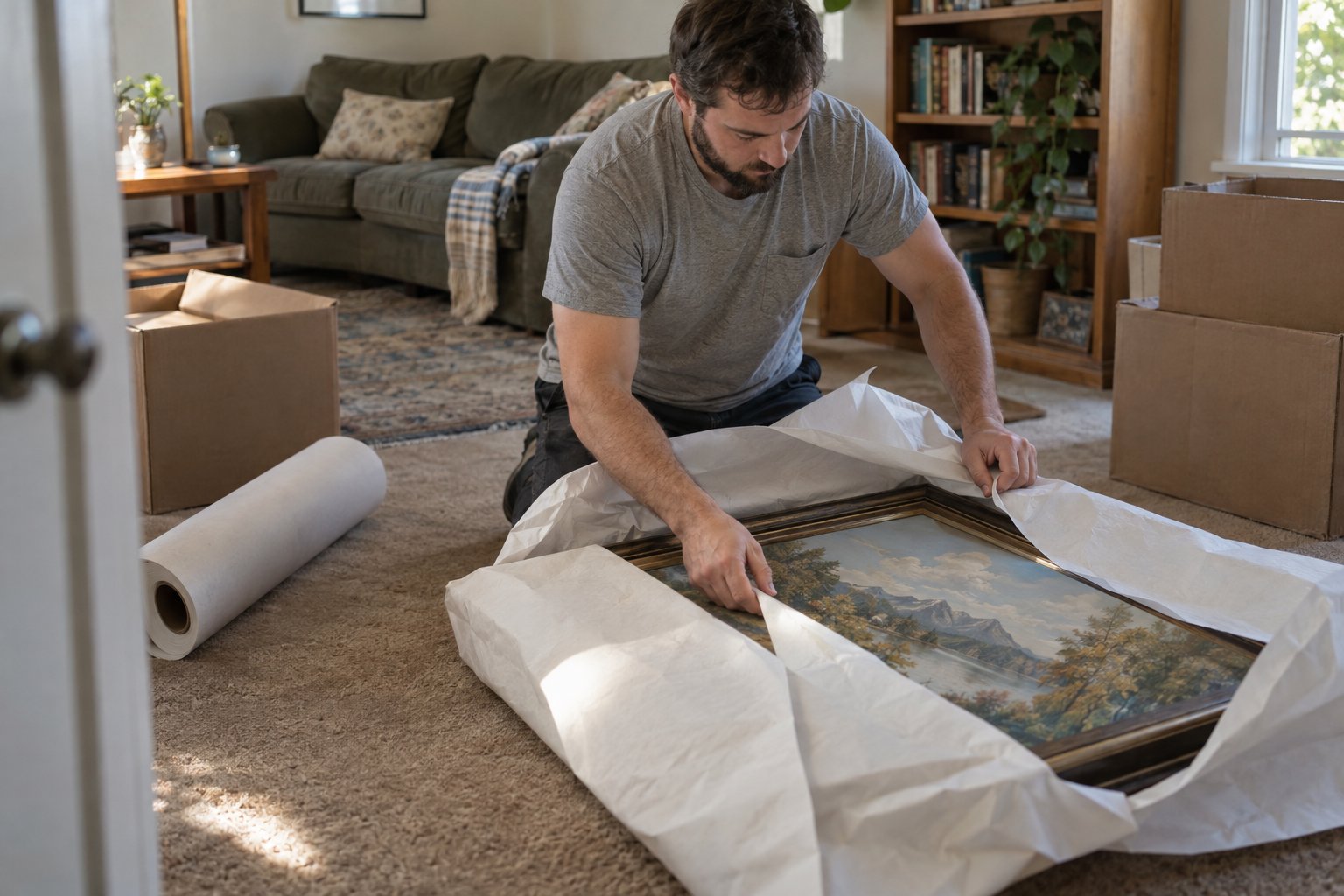
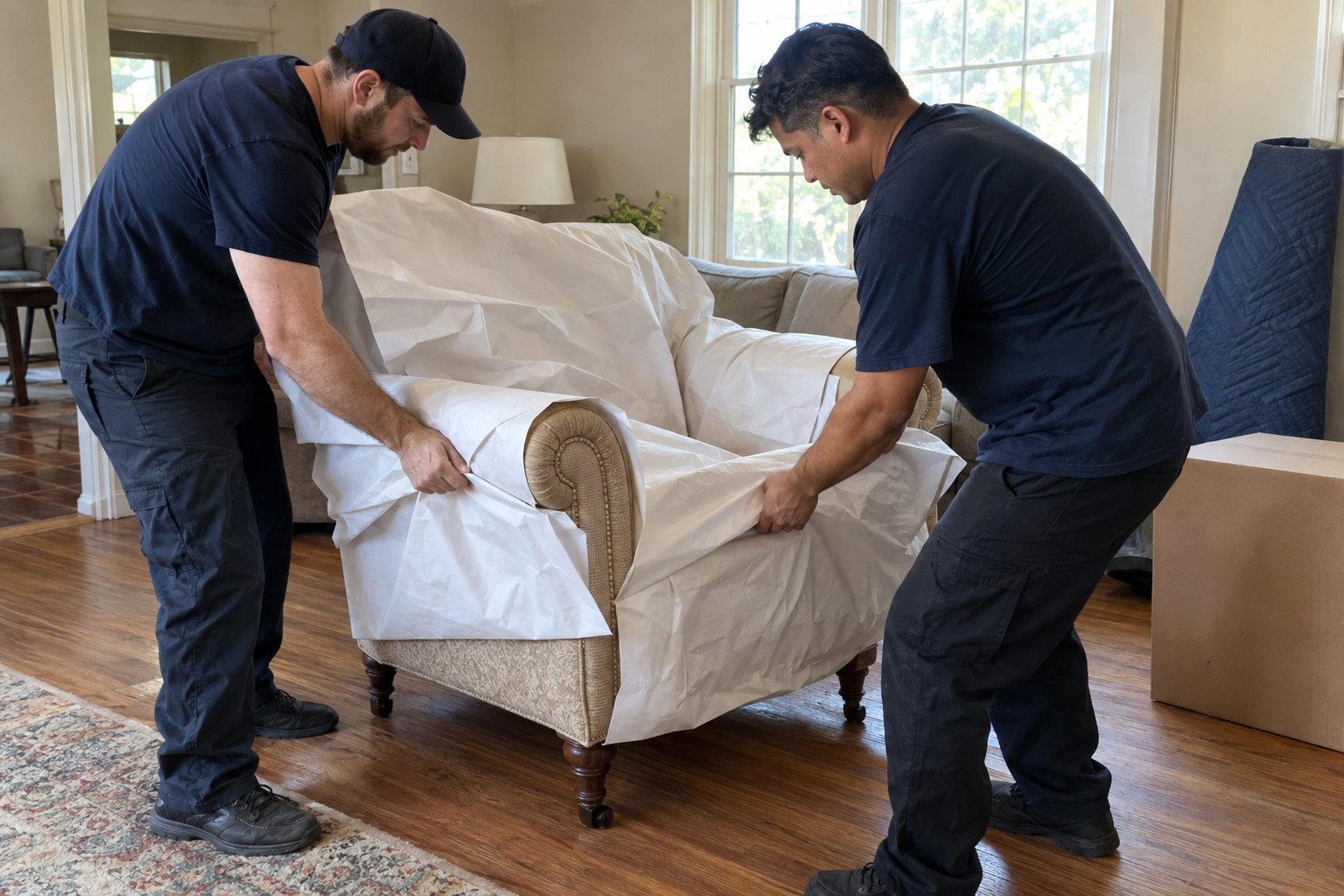
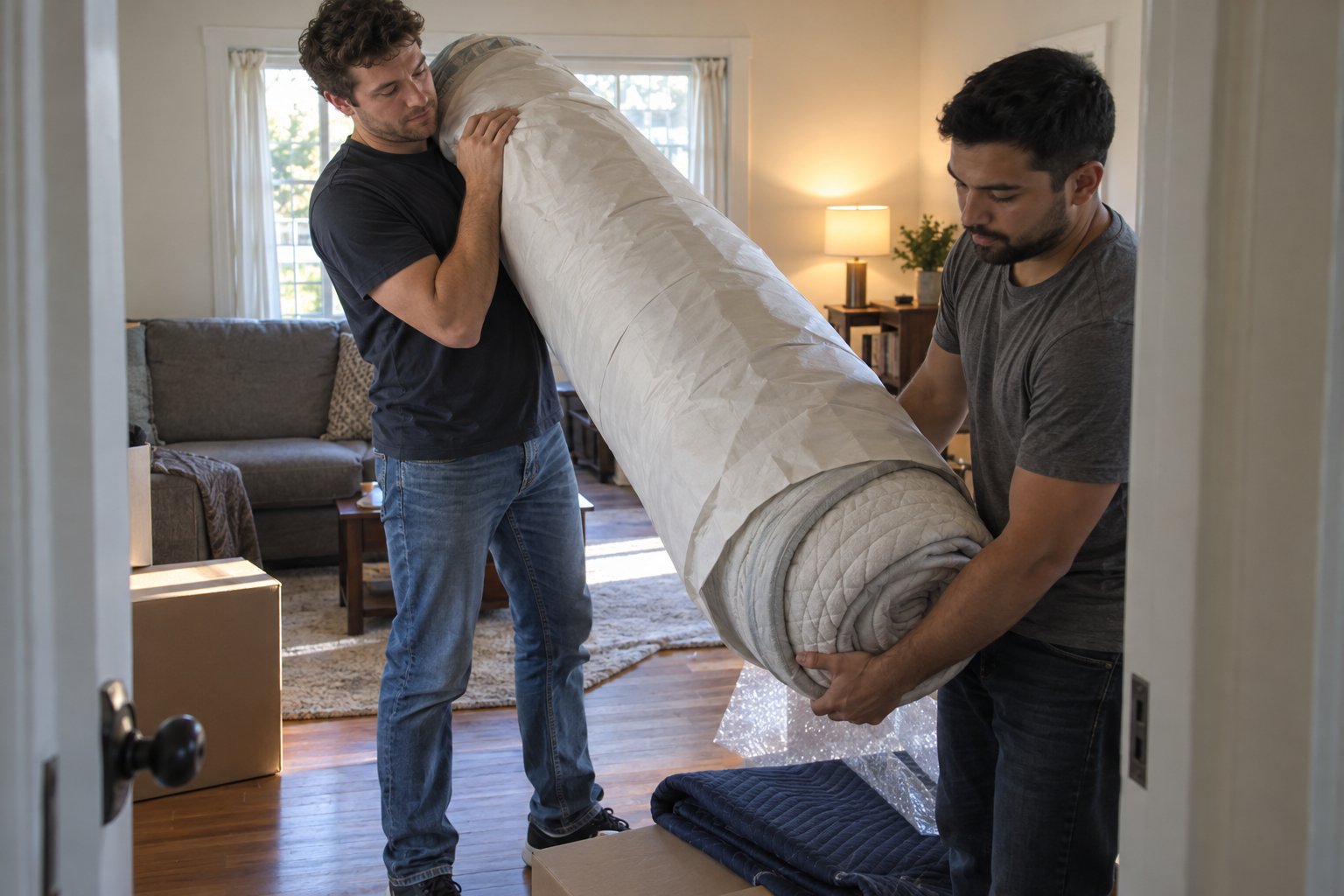
For anything valuable, oversized, or sentimental, let your movers pack and load it. Professional crews carry mirror and picture cartons, corner protectors, and packing paper specifically sized for frames, and that equipment does more for a piece's survival than a blanket and a hope.
Where you add value is in the prep work before the crew touches anything:
- Remove nails and wall anchors as you take each piece down so nothing gets left behind or stepped on.
- Group pieces by size in a clear, out-of-the-way spot (a cleared bed or a single room works well) so the crew can see everything at once.
- Separate anything irreplaceable, like original art or heirloom pieces, and point it out directly to the crew lead so it gets extra attention or travels with you personally.
- Leave small hardware taped to the back of each frame in a labeled bag so reassembly at the new place is simple.
If you want the full breakdown of wrapping techniques, corner protection, and how to stack canvases safely for transport, our guide on how to move paintings and framed art covers that in detail.
What About Mirrors, Shelves, and Other Wall-Mounted Items?
Treat mirrors, shelving units, and anything bolted to a wall the same way you treat paintings: down and grouped before the crew arrives, unless the item requires disassembly tools you don't have. Mirrors are actually more fragile than most framed art because of the glass backing, so they deserve the same early prep and clear labeling.
For shelves or larger wall fixtures that need to be unscrewed from studs, flag this with your moving company ahead of time. Some crews include basic disassembly as part of the service, while others expect it done in advance. Knowing which applies to your booking avoids a surprise on moving day.
What Happens If You Don't Take Everything Down in Time?
If a few pieces are still up when the truck arrives, most crews will take them down for you, but it costs time, and time is usually billed. On an hourly local move, that delay adds directly to your total. On a flat-rate long-distance move, it can still push back your overall schedule for the day.
The bigger risk isn't cost, it's damage. Rushed last-minute removal means less care in how a frame comes off the wall and less time to wrap it properly before it goes on the truck. If you're running behind, tell your crew lead right away rather than trying to catch up while they wait. A quick heads-up lets them plan the load order around it instead of discovering it mid-move.
Getting the Rest of Your Move Day Timing Right
Clearing your walls is one piece of a bigger moving-day checklist, and it's worth locking in the rest of your prep on the same schedule. If you're working with local moving services, confirm your arrival window and any access restrictions (parking, elevators, stairwells) at the same time you confirm your date. For moves that cross state lines, the planning window looks different, and our guide to long distance moving walks through what to line up in advance.
If you still have questions about what your crew expects on moving day, from wall art to furniture disassembly, it's worth asking directly when you book. Get a moving quote and we'll walk you through exactly what to prep before our team arrives.