.png)
How to Choose a Storage Unit Size for a Move (Without Paying for Empty Space)
The right storage unit size for a move is usually one size bigger than you think you need, but not two. Most people renting storage during a move either underestimate how much a few rooms of furniture actually takes up, or they pay for a unit twice as large as necessary out of caution. Getting the size right saves money every single month you rent it, and it is easier to figure out than most storage companies make it sound.
Below is a practical way to size a unit based on what you are actually moving, not just a generic chart with a studio apartment on one end and a five bedroom house on the other.
What Size Storage Unit Do I Need for My Move?
For most one to two bedroom households, a 10x10 unit holds the furniture and boxes comfortably. Studio and one-bedroom apartments usually fit in a 5x10, while three to four bedroom homes typically need a 10x20 or larger. The right size depends less on square footage of your home and more on furniture count, box volume, and whether you are storing everything or just the overflow.
Use this as a starting range, then adjust using the sections below for what actually fills space fastest.
Quick Sizing Reference
- 5x5: A few boxes, seasonal items, or the contents of a small closet
- 5x10: Studio or one-bedroom apartment, roughly a walk-in closet's worth of furniture
- 10x10: One to two bedroom home or apartment, including a couch, bedroom set, and boxes
- 10x15: Two to three bedroom home with appliances and larger furniture
- 10x20: Three to four bedroom home, close to a one-car garage in floor space
- 10x30: Four plus bedrooms or a home with a garage, basement, or workshop full of items
Why Furniture Shape Matters More Than Room Count
Two three-bedroom homes can need two different unit sizes if one has bulky furniture and the other does not. Bedroom sets, sectional sofas, and large appliances eat floor space fast because they cannot be stacked as efficiently as boxes. A home heavy on furniture but light on boxes often needs to size up from the standard recommendation for its bedroom count.
Boxes stack to the ceiling in most facilities, so a home with a lot of books, kitchenware, and packed closets but modest furniture can sometimes size down. Before booking, walk through your home and separate what you own into two mental piles: furniture that has to sit flat, and boxes that can stack. The furniture pile is what actually decides your unit size.
5x10 vs 10x10 Storage Unit: Which One Do You Actually Need?
A 5x10 fits a mattress, a few boxes, and small furniture, about the contents of a studio or a single room. A 10x10 doubles that footprint and comfortably holds a one to two bedroom household including a sofa, dining set, and a full closet of boxes. If you are storing an entire apartment rather than a handful of items, go with the 10x10.
The most common sizing mistake in this range is renting a 5x10 for a full one-bedroom apartment. It technically fits if everything is stacked tightly to the ceiling with no walking space, but you lose the ability to access anything without unloading half the unit first. If you expect to retrieve items partway through your move or storage period, size up.
How Long You're Storing Changes What Size Makes Sense
Short-term storage during a move, say a few weeks between closing dates, favors packing density over access. Longer-term storage, especially anything past two or three months, favors leaving an aisle down the middle so you are not unstacking the whole unit to reach a box in the back.
If you are between homes for an unknown stretch of time, it is often worth renting the next size up specifically to preserve that access. The extra monthly cost is usually smaller than the hassle of fully unpacking a tightly stuffed unit to find one item.
Should You Rent Separate Storage or Combine It With Your Move?
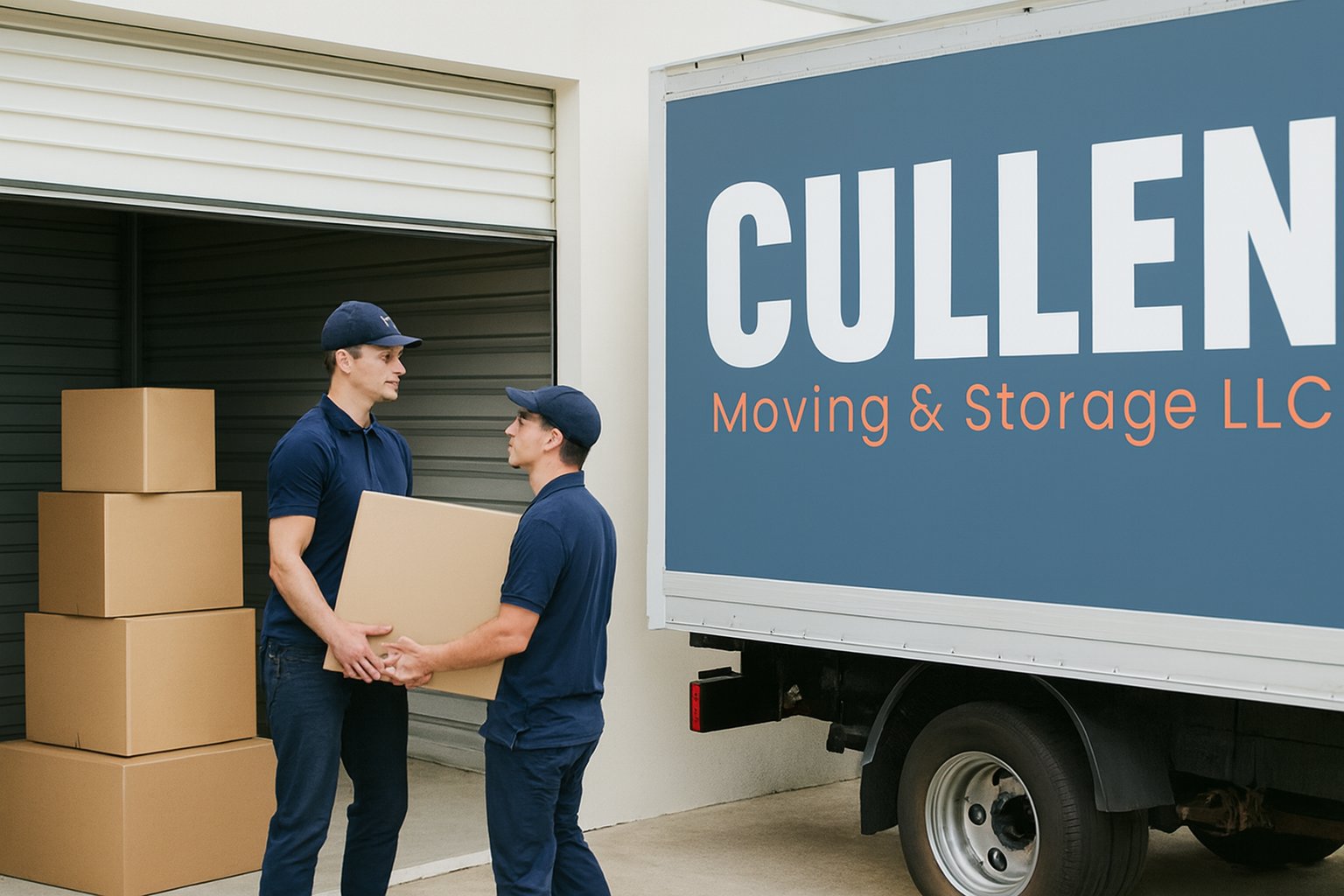
If you are already hiring movers, ask whether they offer moving and storage together rather than booking a self-storage unit and a separate moving crew. Combining the two typically means one load, one unload, and no second trip to a storage facility on a different day. It also lets the crew advise on unit size in person based on what they are actually loading, which is more accurate than any chart.
This matters most when your move involves a gap between move-out and move-in dates, since your belongings need to sit somewhere for a period regardless of unit size. A single provider handling both the transport and the storage removes one layer of coordination from an already busy week.
Common Sizing Mistakes That Cost You Money
The two most expensive mistakes are renting too small and needing a second unit mid-move, or renting too large and paying for months of empty floor space. Both are avoidable with a short inventory walk-through before you book.
- Forgetting vertical stacking: Most facilities allow stacking to 7 or 8 feet, which changes your real capacity more than square footage alone.
- Not accounting for boxes you have not packed yet: People size units based on what is currently out and visible, then forget the closets and garage.
- Skipping the walkway: If you need mid-term access, subtract the aisle space from your usable capacity before comparing sizes.
- Sizing to the room count instead of the furniture: A "two bedroom" with a sectional and a china cabinet needs more room than a sparsely furnished two bedroom.
Once you have packed everything into boxes, a quick way to sanity check your estimate is to compare your total box and furniture count against our guide to packing a storage unit, which covers how to actually load a unit so nothing gets crushed or blocks access.
Getting an Accurate Size Recommendation
A phone estimate based on bedroom count alone is a starting point, not a final answer. The most reliable way to size a unit is to have someone who has loaded hundreds of them walk through your inventory with you, whether that is over the phone with a detailed list or in person.
If your move is local to the area, our local moving services team can size your storage needs at the same time they quote your move, since they are already accounting for what has to be loaded onto the truck. For moves that involve setting up storage in a new region entirely, our Delaware location page has details on facilities and service in that area.
Whichever route you take, get your inventory down in writing before you call for a quote. A vague list produces a vague size recommendation, and an overly generic unit size is how people end up paying for square footage they never use.
Ready to get sizing and pricing sorted at once? Get a moving quote and mention that you need storage, and the estimate will account for both.