.png)
What to Expect When Packing a Home Gym Before Moving Day
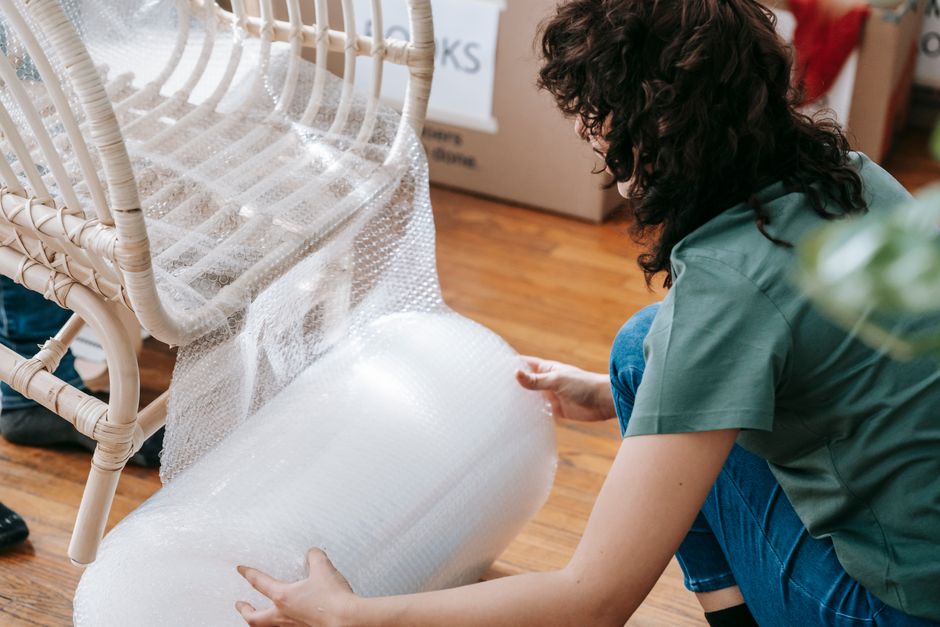
Knowing how to pack and move a home gym correctly can save you from some of the most physically demanding, injury-prone, and logistically complex mistakes of any relocation. The home gym looks straightforward on the surface — a few machines, a rack of weights, some mats on the floor — but each of those categories demands a completely different approach. Free weights and plate sets are among the densest items in any home. Cardio machines like treadmills, ellipticals, and stationary bikes contain motors, circuit boards, and folding mechanisms that break permanently when handled incorrectly. Power racks and cable systems disassemble into heavy, unwieldy steel sections that scratch floors and doorframes the moment someone rushes the process. Most people attempt to move a home gym with whatever movers happen to be standing there and whatever straps are already on the truck. That approach ends with a broken treadmill belt, a cracked floor, or a back injury on the stairs.
Need a professional team to handle the disassembly, protection, and transport of your home gym? Call Cullen Moving and Storage LLC at 1 (215) 327-9733 — we move heavy equipment, bulky machines, and dense free weights every day with the experience and equipment to protect everything at every step.
The home gym move fails most often because people treat it as a single heavy-lifting job rather than a multi-category packing problem. Free weights require dedicated, reinforced boxes with strict weight limits per box. Cardio machines require full disassembly, electrical component protection, and upright transport positioning. Resistance and cable machines require hardware bags, labeled components, and a reassembly reference. A category-by-category approach — declutter first, free weights second, machines disassembled and protected third, flooring and accessories last — takes more time upfront but eliminates every one of those problems.
Start With a Full Home Gym Declutter Before You Pack Anything
Before you touch a single dumbbell or loosen a single bolt, walk the entire gym and make deliberate decisions about what is worth moving. Home gyms accumulate equipment that no longer gets used — resistance bands that have lost their tension, foam rollers that have permanently compressed, a rowing machine that has been a clothes rack for two years. Moving is the right moment to be ruthless. Every item you choose not to move is one less item to wrap, load, carry up a flight of stairs, and find space for in the new home.
Sort Into Keep, Sell, and Discard
Establish three zones outside the gym — Keep, Sell, and Discard — and assign every piece of equipment to one before packing begins. Weight benches with torn upholstery, barbells with bent sleeves, and cardio machines with persistent mechanical problems should not follow you to the new home. Used gym equipment sells quickly on local resale platforms, and selling heavy items locally eliminates the need to move them entirely. Be especially honest about machines you purchased with good intentions but rarely use — the move is a natural moment to reset.
Inventory All Hardware and Accessories Before Disassembly
Before you disassemble a single machine, photograph every piece of equipment from multiple angles. These photos serve two purposes: they document the pre-move condition for any insurance claim, and they give you a visual reassembly reference at the destination. Collect every owner's manual you still have and store them together in a labeled plastic bag. If manuals are missing, locate and bookmark the PDF versions online before moving day — reassembly is significantly harder without them.
How to Pack and Move Free Weights, Plates, and Dumbbells
Free weights are the most deceptively dangerous items in a home gym move. A single 45-pound plate feels manageable when you lift it in the gym. Put six of them in a box and you have a 270-pound load that no mover should carry and no box is designed to hold. The number one rule for packing free weights is: small boxes only, and never fill them completely.
Use Small, Reinforced Boxes and Strict Per-Box Weight Limits
Use small moving boxes — no larger than 1.5 cubic feet — for all free weights, plates, and dumbbells. Pack each box to no more than 40 to 50 pounds, regardless of how much space is left. Fill remaining space with packing paper or foam to prevent items from shifting. Double-box any cast iron plates heavier than 25 pounds, placing a layer of cardboard between them to prevent edges from cutting through the outer box. Label every weight box clearly on all four sides: EXTREMELY HEAVY — LIFT WITH TEAM.
Wrap Adjustable Dumbbells and Specialty Bars Separately
Adjustable dumbbell sets — particularly selectorized models like Bowflex or PowerBlocks — contain precision locking mechanisms that break if the unit is dropped even from a short height. Wrap each unit individually in moving blankets secured with stretch wrap, and pack them in their original cases if available. Barbells and specialty bars should be wrapped in moving blanket sleeves and transported horizontally, never stood upright where they can tip and damage other items or injure someone on the truck.
How to Disassemble and Move Cardio Machines
Treadmills, ellipticals, stationary bikes, and rowing machines represent the highest risk of permanent damage in a home gym move. These machines contain electric motors, circuit boards, tension cables, and folding hinges that fail when the unit is transported improperly. No cardio machine should be loaded onto a truck fully assembled unless the owner's manual explicitly states it is safe to do so.
Treadmill Disassembly and Transport
Most residential treadmills have a fold-up deck that reduces the footprint for transport. However, folding alone is not sufficient — the console arms, handrail sensors, and power cords must be secured before the unit is moved. Detach any removable console accessories. Fold the deck and use a treadmill lock pin or a ratchet strap to hold it in the folded position. Wrap the entire unit in moving blankets and secure with stretch wrap. Transport the treadmill upright on its wheels whenever possible; laying it flat can stress the motor housing. Use an appliance dolly with a ratchet strap to walk it down stairs — do not attempt to carry a treadmill by hand.
Ellipticals, Bikes, and Rowing Machines
Ellipticals are particularly awkward to move because of their wide stride arm span. Remove the stride arms entirely if possible — most models have bolted connections that require only a socket wrench. Label each bolt set in a sealed plastic bag and tape it directly to the component it belongs to. For stationary bikes, remove the seat post, handlebars, and any display console. For rowing machines, collapse the rail if the model allows it and detach the monitor arm. All electronic components — monitors, consoles, and sensor wires — should be wrapped in anti-static foam or bubble wrap before being placed in a labeled box.
How to Move a Power Rack, Weight Bench, and Cable Systems
Multi-station cable machines and power racks are the most structurally complex items in a home gym. They are bolted together from heavy steel components, anchored to the floor in some installations, and threaded with weight stacks, pulleys, and cables that must be carefully managed during disassembly to avoid tangling or snapping.
Disassemble Completely — Never Move a Rack in One Piece
A fully assembled power rack can weigh several hundred pounds and stands six to eight feet tall. It cannot be safely navigated through a standard doorframe without disassembly, and attempting to do so risks permanent damage to the rack, the doorframe, and anyone helping carry it. Remove all J-hooks, safety bars, pull-up attachments, and band pegs first. Then disassemble the uprights from the base frame using the original hardware sequence. Place all hardware — bolts, washers, lock nuts — in labeled zip-lock bags and tape each bag to its corresponding frame section. Photograph the assembled configuration before you start so reassembly is not a guessing game.
Moving a Weight Bench
Standard flat benches are among the easiest gym items to move — remove any attached uprights or spotting arms, wrap the padded surface in stretch wrap to protect the upholstery, and transport flat. Adjustable benches should have their adjustment mechanisms secured with a rubber band or strap to prevent the back pad from swinging freely during loading. Heavy commercial-grade benches with steel frames should be wrapped in moving blankets to protect both the upholstery and any painted surfaces.
Protecting Your Floors During a Home Gym Move
Home gyms are almost always located in spaces with vulnerable flooring — basement concrete, hardwood floors in a converted spare room, or rubber gym flooring installed over a finished surface. The act of moving heavy equipment out of a gym causes as much damage to floors and walls as the equipment itself, if not more.
Use Floor Protection From the First Item to the Last
Lay Ram Board, rosin paper, or thick moving blankets over all flooring in the path from the gym to the moving truck before any equipment is moved. Pay particular attention to corners, thresholds, and any staircase landings. Use furniture sliders under the legs of any machine you are repositioning before lifting — dragging a power rack across a hardwood floor will leave permanent gouges. At doorframes and tight corners, use cardboard corner protectors or foam pipe insulation to protect both the frame and the equipment passing through it.
Roll Up Gym Flooring Last and Label It Clearly
Interlocking rubber tiles and rolled gym flooring should be the last items removed from the gym and the first to be reinstalled at the new home — they protect the destination floor during reassembly just as they protected the origin floor during use. Roll rubber flooring tightly, secure with stretch wrap, and label each section with its position in the room layout if you want a seamless reinstallation. Interlocking tiles should be stacked flat in large, clearly labeled boxes, not loose in the truck where they shift and crack under other items.
Loading a Home Gym Into the Moving Truck
The loading sequence for a home gym is critical. Dense, heavy items loaded incorrectly can shift in transit and destroy everything packed near them — or worse, fall when the truck doors are opened at the destination.
Load free weight boxes first, directly against the front wall of the truck, flat on the floor. They are the densest items on the truck and should never be stacked higher than two boxes. Cardio machines go next, positioned upright on their wheels whenever possible and secured to the truck walls with ratchet straps. Power rack components and disassembled steel frames go along the truck walls, lying flat and padded with moving blankets between each section. Accessories, flooring, and soft goods go last, filling gaps and never placed under heavy equipment. Label every box and component before it goes onto the truck — a home gym that arrives unlabeled becomes an hours-long reassembly puzzle.