.png)
Is It Hard to Pack a Home Library Full of Books?
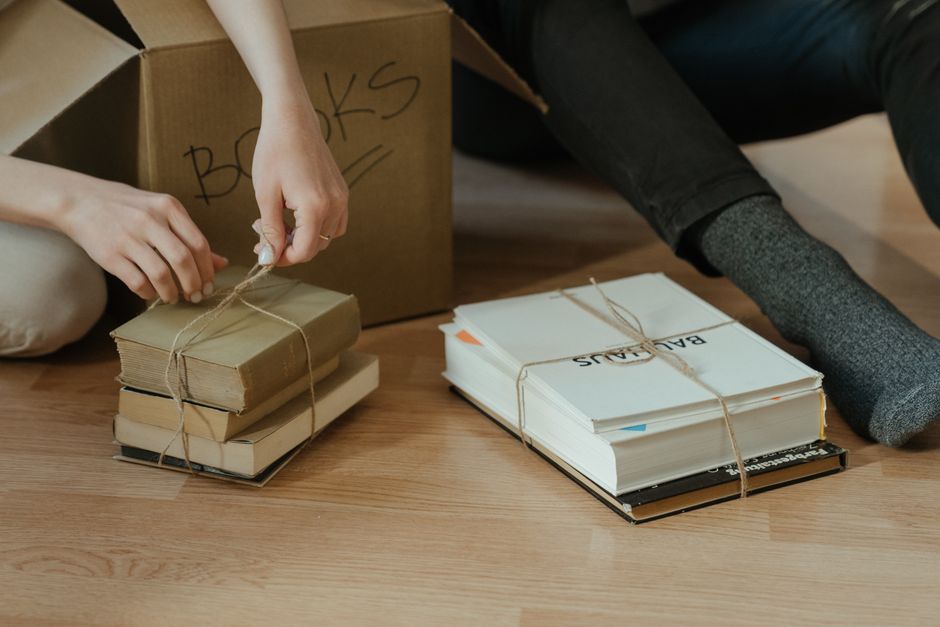
Knowing how to pack and move a home library correctly can save you from some of the most back-breaking, damage-prone, and emotionally costly mistakes of any relocation. A home library looks orderly from the doorway — rows of books on solid shelving, a reading chair, maybe a few framed maps or display cases — but the moment you start preparing it for a move, you realize every element inside it carries a completely different set of requirements. Books are deceptively heavy; a single standard box filled with hardcovers can easily exceed 60 pounds, enough to split a box mid-carry or injure a mover on the stairs. Bookshelves are tall, tip-prone, and assembled in ways that do not survive being laid flat without internal supports. Rare books, signed first editions, and collectible volumes need archival-quality protection that standard packing paper simply cannot provide. Framed artwork, globes, and display items scattered throughout a library are fragile in ways that are easy to underestimate when they are surrounded by sturdy-looking hardcovers. Most people pack a home library by filling whatever boxes are on hand with as many books as will fit, then wonder why the boxes collapse and the shelves arrive scratched. That is exactly the scenario a thoughtful, category-by-category plan prevents.
Need a professional team to handle the packing, protection, and transport of your home library? Call Cullen Moving and Storage LLC at 1 (215) 327-9733 — we move books, heavy shelving, fragile collectibles, and all the items around them every day with the care and equipment to protect everything at every step.
The home library move fails most often because people treat it as a single, straightforward job — "just box up the books and break down the shelves" — when in reality it contains five or six completely distinct categories of items, each requiring a different packing method, different materials, and a different position in the truck. A category-by-category approach — declutter first, rare and fragile items second, general books third, decorative accessories fourth, and shelving last — takes more time upfront but eliminates nearly every common mistake.
Start With a Full Library Declutter Before You Pack Anything
Before you wrap a single book or disassemble a single shelf, walk the entire library and make honest decisions about what is worth moving. Home libraries accumulate clutter in a particularly quiet way: duplicate copies of books you forgot you owned, paperbacks from decades ago that have yellowed beyond readability, reference volumes that are now obsolete, and magazines or catalogs that seemed worth keeping at the time. Every item you move adds weight — literally — to your relocation budget and effort.
Sort Into Keep, Donate, and Discard
Establish three clear zones before packing begins — Keep, Donate, and Discard — and assign every book and item to one before anything goes into a box. Libraries, used bookstores, and nonprofit literacy organizations will often accept gently used books in bulk; some will even arrange a pickup. Books in poor condition — mold-damaged, water-stained, or structurally compromised — should be discarded rather than moved. Furniture in rough shape, such as bowing particleboard shelves, is often more cost-effective to replace than to transport.
Weigh the Real Cost of Moving Every Book
A useful exercise before packing is to estimate the total weight of your collection. A typical hardcover weighs roughly one to two pounds; a paperback roughly half a pound. If you have 500 books, you are looking at somewhere between 350 and 800 pounds of books alone — before a single shelf or chair is added. That weight directly affects the time, the truck size, and the physical effort required. Donating or selling even 20 percent of a large collection can make a meaningful difference.
How to Pack General Books for a Move
Books require their own packing strategy — one that prioritizes box weight over box volume. The single most common mistake people make when packing a library is treating books like any other item and filling large boxes completely. A large box of books is nearly impossible to carry safely and almost certain to split at the bottom during the move.
Use Small, Heavy-Duty Boxes and Strict Weight Limits
Pack books exclusively in small boxes — ideally the "book box" size that moving supply companies sell specifically for this purpose, with dimensions around 1.5 cubic feet. Set a firm weight limit of 30 to 35 pounds per box, which is roughly the point at which a box can still be carried safely by one person without risk of injury or structural failure. Stop filling before the box is physically full if it has already reached that weight threshold.
Orient Books Correctly to Prevent Spine Damage
Pack books in one of two orientations: flat, stacked in layers like they are lying on a table, or upright with spines facing up, the same way they sit on a shelf. Never pack books with the spine facing down or the pages facing outward — both orientations stress the binding and cause long-term spine damage. Fill any gaps in the box with crumpled packing paper to prevent shifting during transit. Never use a book box as a catch-all for non-book items, which shifts weight unpredictably and crushes the books underneath.
Label Every Book Box With Contents and Weight
Label each box clearly on the side (not the top, which gets covered by other boxes) with the room destination, a general content description — "Reference — Nonfiction," "Paperbacks — Fiction A–M" — and the approximate weight. Weight labels are especially useful for movers who need to know which boxes require a two-person carry before they pick them up.
How to Pack Rare Books, First Editions, and Collectible Volumes
Rare books, signed editions, antique volumes, and other collectibles require significantly more protection than a general book collection. These items are irreplaceable — not just monetarily, but in terms of personal or historical significance — and need to be treated as the fragile, high-value items they are.
Use Archival Wrapping for High-Value Books
Each rare or collectible book should be individually wrapped in acid-free tissue paper before any additional packing material is applied. Acid-free tissue prevents the chemical transfer that can occur when standard newsprint or packing paper contacts a book's cover over an extended period. After wrapping in tissue, add a layer of standard packing paper or bubble wrap and tape the bundle closed. Never use rubber bands, which cut into covers and spine materials over time.
Pack Rare Books in Their Own Dedicated Box
Do not mix rare or valuable books with general collection boxes. Use a dedicated small box, lined with a layer of foam padding or crumpled packing paper on all six interior surfaces before any books are placed inside. Pack rare books flat, stacking no more than three to four volumes per layer depending on their size and weight. Mark the box clearly as "High Value — Fragile — This Side Up" on all four sides and the top. Keep this box with you in a personal vehicle if possible rather than in the moving truck.
Document and Photograph Before Packing
Before wrapping any rare or valuable book, photograph each volume — front cover, back cover, and spine — and note its approximate value in a simple inventory list. This documentation serves two purposes: it helps you confirm everything arrived, and it provides a record for insurance purposes in the unlikely event of damage during transit.
How to Pack Library Accessories: Globes, Artwork, and Display Items
A home library rarely contains only books and shelves. Framed maps, antique globes, decorative bookends, display cases, magnifying glasses, and reading lamps are common fixtures — and each one needs individualized packing attention.
Framed Artwork and Maps
Remove framed pieces from the walls as early as possible and lean them against a protected surface while you prepare the rest of the room. Wrap each framed piece in a layer of acid-free tissue followed by bubble wrap, securing the bubble wrap with tape that does not contact the frame surface directly. Transport frames standing upright on their long edge — never flat, and never stacked without a protective layer between them. Frame boxes or mirror boxes from moving suppliers provide the best protection for large or valuable pieces.
Globes and Spherical Items
Antique or decorative globes are among the most fragile items in a home library. Remove the globe from its stand if the design allows; pack the stand separately. Wrap the globe completely in several layers of bubble wrap, securing without overtightening. Place the wrapped globe in a box with at least two inches of padding on all sides and fill any remaining space with crumpled packing paper. Mark the box "Fragile — Do Not Stack."
Lamps and Small Decorative Items
Pack reading lamps by removing the shade and bulb separately. Wrap the shade in tissue and crumpled paper; pack it in a box where it will not be compressed by other items. Wrap the lamp base in bubble wrap and box it with its cord coiled and secured. Small decorative items — bookends, paperweights, desk accessories — should be individually wrapped and packed together in a single clearly labeled box rather than scattered across multiple general boxes where they can be forgotten or damaged.
How to Disassemble and Move Library Shelving
Bookshelves are among the most logistically complex items in any room move. They are tall enough to tip during transit, heavy enough to require two people even when empty, and often assembled with hardware that is easy to lose and difficult to replace after the fact.
Empty Every Shelf Completely Before Moving
Never attempt to move a bookshelf — even a small one — with books still inside. The added weight makes the unit unstable on stairs and in the truck, and the weight is distributed in a way that stresses shelf brackets and the unit's structural joints. Empty every shelf completely before disassembly begins.
Disassemble Modular and Flat-Pack Units Carefully
Modular shelving systems — IKEA BILLY units and similar flat-pack designs — should be fully disassembled before moving. Remove all shelves, panel pins, and hardware. Place all screws, bolts, cam locks, and small hardware into a labeled zip-lock bag and tape that bag securely to one of the main panels. Wrap each panel in moving blankets or furniture pads and secure with stretch wrap to prevent scratching. Keep all panels from the same unit together and label each one with the unit name and panel description.
Protect Solid Wood and Built-In Shelving
Solid wood or custom-built shelving units that cannot be disassembled must be moved as intact pieces. Wrap all exposed surfaces in furniture pads and secure the wrap with furniture bands or stretch wrap — not tape applied directly to wood surfaces, which pulls finish on removal. Use a furniture dolly to move heavy units across floors, and assign at least two people to every corner and staircase transition. If the unit is taller than it is wide, transport it upright in the truck, strapped to the truck wall, rather than laying it flat, which risks warping.
Loading and Transporting a Home Library in the Moving Truck
The final step is getting the library onto the truck in an order that protects everything from shifting, compression, and damage during transport.
Load heavy shelving units first, against the cab wall of the truck where weight is most stable. Book boxes — heavy but small — should be stacked no more than two high and positioned in the middle of the truck where lateral movement is limited. Fragile boxes containing rare books, artwork, and globes should be loaded last, in a position where they cannot be buried under other items and where they will be the first things removed at the destination. Label orientation matters: every box with a directional requirement should be loaded so that the "This Side Up" label is visible without moving other boxes.
Across the entire truck load, use furniture blankets between hard surfaces that touch each other and fill any open space with soft goods — moving blankets, pillows, or bagged clothing — to prevent shifting during transit. A well-packed library truck should have no items loose enough to move when the truck brakes or turns.
Ready to move your home library without the stress? Call Cullen Moving and Storage LLC at 1 (215) 327-9733 or get a free quote online — our team handles books, shelving, and rare collectibles with the same care and preparation every time.