.png)
How to Move Furniture Without Scratching Your Floors or Walls
Knowing how to move furniture without scratching floors or walls is one of the most valuable things you can learn before moving day. A single careless drag across hardwood can leave a gouge that costs hundreds of dollars to repair. A sofa corner pushed too hard into drywall creates a dent or hole that can hold up your security deposit return. The damage is almost always preventable — but only if you approach the move with the right tools and technique before anything gets lifted.
Need a professional team that protects your home as carefully as your belongings? Call Cullen Moving and Storage LLC at 1 (215) 327-9733 — we handle every move with the gear and training to keep your floors and walls pristine.
Most floor and wall damage during a move is not caused by accidents — it is caused by skipping steps. People lift heavy dressers without protecting the floor underneath, carry sofas through hallways without padding the corners, or drag appliances because they do not have the right sliding equipment on hand. A brief investment in preparation eliminates nearly all of those risks and makes the entire move faster and less exhausting.
Understand What Causes Floor and Wall Damage During a Move
Before you can prevent damage, it helps to understand exactly what causes it. Floor and wall damage during furniture moves typically falls into a few predictable categories.
Direct Dragging on Hard Floors
Dragging furniture across hardwood, laminate, or tile is the single most common cause of moving-day floor damage. The legs of chairs, tables, and dressers concentrate enormous weight onto very small contact points. Even a brief drag of a few inches can leave a visible scratch or gouge, particularly on softer wood species. Tile can crack under impact, and laminate can delaminate along a scratch line if the drag is long enough.
Furniture Corners Against Walls
Drywall is surprisingly fragile. A mattress corner, a table edge, or the arm of a sofa pressed against a wall while being angled through a doorway can punch right through the paper facing and leave a dent or hole. Baseboards are equally vulnerable — a heavy piece set down even slightly off-target can chip or crack the trim along the bottom of a wall.
Appliance and Leg Contact on Tile and Stone
Refrigerators, washing machines, and other appliances often have metal bases or hard plastic feet that act like chisels against tile or natural stone floors. Even carpet is not immune — dragging a heavy appliance across carpet can compress and tear the fibers, leaving a visible track.
Gather the Right Protective Equipment Before You Start
Professional movers arrive at every job with a toolkit of protective supplies that most homeowners do not keep on hand. Assembling these items before you begin is the single most effective thing you can do to prevent damage.
- Furniture sliders — flat discs or pads placed under furniture legs that allow heavy pieces to glide across hard floors with minimal friction. Hard plastic sliders work on carpet; felt or rubber-faced sliders work on hardwood, tile, and laminate. Using the wrong type for your floor surface can make things worse, so read the packaging carefully.
- Moving blankets and furniture pads — thick quilted pads that wrap around furniture corners and edges to prevent them from contacting walls, door frames, and banisters. Every professional truck carries dozens of these for exactly this reason.
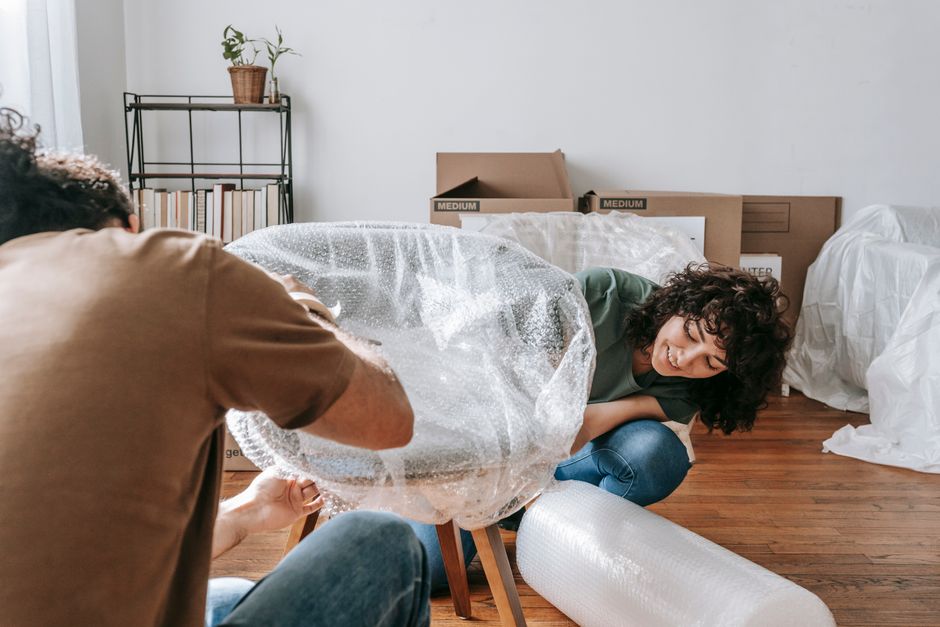
- Stretch wrap (plastic film) — wraps around moving blankets to hold them in place on awkward shapes and protects upholstered surfaces from snags and dirt.
- Floor runners and cardboard sheets — laid over high-traffic paths to protect both flooring and carpet from the repeated foot traffic and equipment wheels that come with a full move.
- Corner guards and door frame protectors — foam or rubber pieces that clip or tape to door frames and wall corners, cushioning any accidental contact.
- Furniture dollies and hand trucks — rolling platforms that keep heavy items off the floor entirely and distribute weight across wheels rather than concentrating it on sharp legs.
You do not need to own all of this equipment. Most moving supply retailers and hardware stores rent or sell furniture sliders and pads, and a modest investment here will cost far less than a single floor repair.
Techniques for Moving Furniture Safely on Every Surface
Having the right equipment only works if you apply it correctly. The techniques below cover the most common scenarios you will encounter on moving day.
Hardwood and Laminate Floors
Never drag anything directly on hardwood or laminate — even pieces with felt pads on the legs can scratch if grit or debris is trapped between the pad and the floor. Before you move a single item, sweep or vacuum the entire path from the furniture's current position to the exit. Then do one of the following:
- Place felt furniture sliders under every leg or contact point, and push or pull the item smoothly rather than jerking it. Avoid stops and starts, which concentrate force.
- Lift the item entirely onto a furniture dolly and roll it. This is the most damage-proof method for heavy pieces and any route longer than a few feet.
- For very heavy items without legs — such as a large bookcase — lay a sheet of cardboard or a moving blanket on the floor and tip the piece onto it before sliding.
Tile and Stone
Tile is vulnerable to both scratching and cracking under impact. The same rules apply as for hardwood, but pay extra attention to appliances and anything with metal feet. Rubber-faced sliders are preferable to hard plastic on tile because they grip better and are less likely to chip the glaze on ceramic. Avoid setting down heavy items with a thud — lower them slowly and deliberately.
Carpet
Carpet may seem more forgiving, but heavy furniture can compress and tear carpet fibers if dragged without protection. Hard plastic sliders designed specifically for carpet allow furniture to glide over the pile without catching. If you are using a dolly, verify that the wheel type is appropriate for your carpet thickness — a narrow hard wheel can leave deep tracks in plush carpet.
Protecting Walls and Door Frames on Every Surface
Floor protection addresses only half the problem. Wall and door frame damage almost always happens at two points: the moment a piece of furniture is tilted or angled to fit through a doorway, and the moment it is set down near a wall. Apply the following habits on every move:
- Wrap all furniture corners and protruding edges in moving blankets or foam padding before the piece leaves its original room.
- Install temporary foam corner guards on door frames whenever carrying anything wider than a box. They take seconds to attach and prevent the most common type of trim damage.
- Assign one person to watch the back end of any piece being angled through a doorway — the person at the front cannot see whether the rear is about to hit the frame.
- When setting a piece down against a wall, leave at least two inches of clearance. Finishing the placement with fine adjustments is always easier than repairing drywall.
Room-by-Room Tips for Protecting Floors During a Move
Different rooms present different challenges, and a few room-specific habits can prevent the damage that general advice misses.
Living Room
The living room typically contains the largest and heaviest pieces — sofas, sectionals, entertainment centers, and coffee tables. Before moving any of them, remove all rugs from the path. Rugs bunch up under furniture legs and can cause a piece to tip unexpectedly. Disassemble entertainment centers and bookshelves into their component parts before moving them; a fully loaded unit is not only heavier but also more likely to flex and tip, catching on floors and walls.
Kitchen
Appliances are the primary floor threat in a kitchen. A refrigerator, dishwasher, or range being pulled across tile is one of the most common sources of floor damage in any move. Always use an appliance dolly rated for the weight, and lay a cardboard or Masonite runway from the appliance to the exit before pulling it free. Check that the path is clear of loose tile grout or cracked tiles that could catch on the appliance base.
Bedroom
Bed frames — particularly metal frames with sharp corner posts — are dangerous to walls and door frames. Disassemble the frame completely before moving it, even if it seems like it might fit as-is. Box springs are large and awkward enough to scrape along a hallway wall the entire length of the corridor if not carried carefully. Two people, one at each end, with moving blankets wrapped around the corners, is the standard approach.
Stairwells
Stairwells concentrate the most risk of damage in any multi-story move. The walls on either side are close, the angles are demanding, and heavy items on stairs have momentum that is hard to control. Protect stairwell walls with moving blankets taped loosely in place before carrying anything up or down. Use a stair-climbing dolly for appliances and heavy boxes whenever possible, and always have a third person spotting from the top or bottom of the staircase.
When to Call a Professional Moving Team
There is a clear point at which the right answer is to call a professional rather than risk your floors and walls. That point arrives sooner than most people expect. If you are dealing with hardwood floors that are more than a few years old and show existing finish wear, the risk of adding new scratches is high even with furniture sliders. If your doorways are narrow — under 34 inches — maneuvering large furniture safely without floor or wall contact requires practiced technique. If you have heavy appliances on tile, stone, or any floor that is not already replaceable, the potential cost of damage significantly outweighs the cost of professional movers.
Professional movers carry all the equipment described in this guide as standard kit. They also carry the experience to assess a path before lifting anything and identify the one or two obstacles that will cause problems before they become problems. That combination of equipment and judgment is what keeps floors and walls intact through even the most complex moves.
At Cullen Moving and Storage LLC, protecting your home is treated as seriously as protecting your furniture. Our team brings moving blankets, sliders, corner guards, and floor runners on every job, and we walk every route before the first item is loaded. Call us at 1 (215) 327-9733 or get a free quote online to talk through your move.