.png)
How Much Should You Tip Movers? A Practical Guide
Most people tip movers $20 to $40 per mover for a half-day local move, and $40 to $75 per mover for a full-day or physically demanding job. There is no legal requirement to tip, but it is the standard way customers in the moving industry say thank you for careful, hard work, and most crews expect it the way restaurant servers do.
If you have never hired movers before, the question usually comes up the morning of the move, cash in hand, unsure whether you are about to insult the crew or overpay wildly. The honest answer depends less on a fixed percentage and more on the length of the job, how heavy and awkward your items were, and how the crew actually treated your home.
Do You Have to Tip Movers?
No, tipping movers is not mandatory the way it is with servers who rely on tips for base wages. It is a gratuity for good service, not a contractual fee, and a written estimate or invoice should never include it as a line item. That said, tipping is deeply customary in this industry, and most crews are paid an hourly wage that assumes tips are part of how a good day is measured.
If a move goes badly, boxes crushed, walls scuffed, hours of unexplained delay, you are not obligated to tip at all. Reserve that judgment for genuinely poor service rather than minor inconveniences that come with any move.
How Much Should You Tip Movers Per Hour or Per Day?
A simple rule that scales with the job: $5 to $10 per mover for every hour worked, or a flat $20 to $40 per mover for a half-day (four hours or less) and $40 to $75 per mover for a full eight-hour day. For a standard three-person crew working a full day, that puts you in the $120 to $225 range total, split evenly among the team.
Adjusting for Difficulty
Move the number up when the crew navigated narrow stairwells, carried a piano or safe, worked in extreme heat, or finished a job that ran long without complaint. Move it down, but rarely to zero, for a short, easy move with minimal furniture and good parking access on both ends.
Tipping the Foreman or Lead
Some customers hand the team lead a slightly larger amount and ask them to distribute it fairly among the crew. This works fine with a crew you trust, but if you want to be certain everyone is tipped fairly, hand cash to each mover individually before they leave.
Should You Tip in Cash or Add It to the Card Payment?
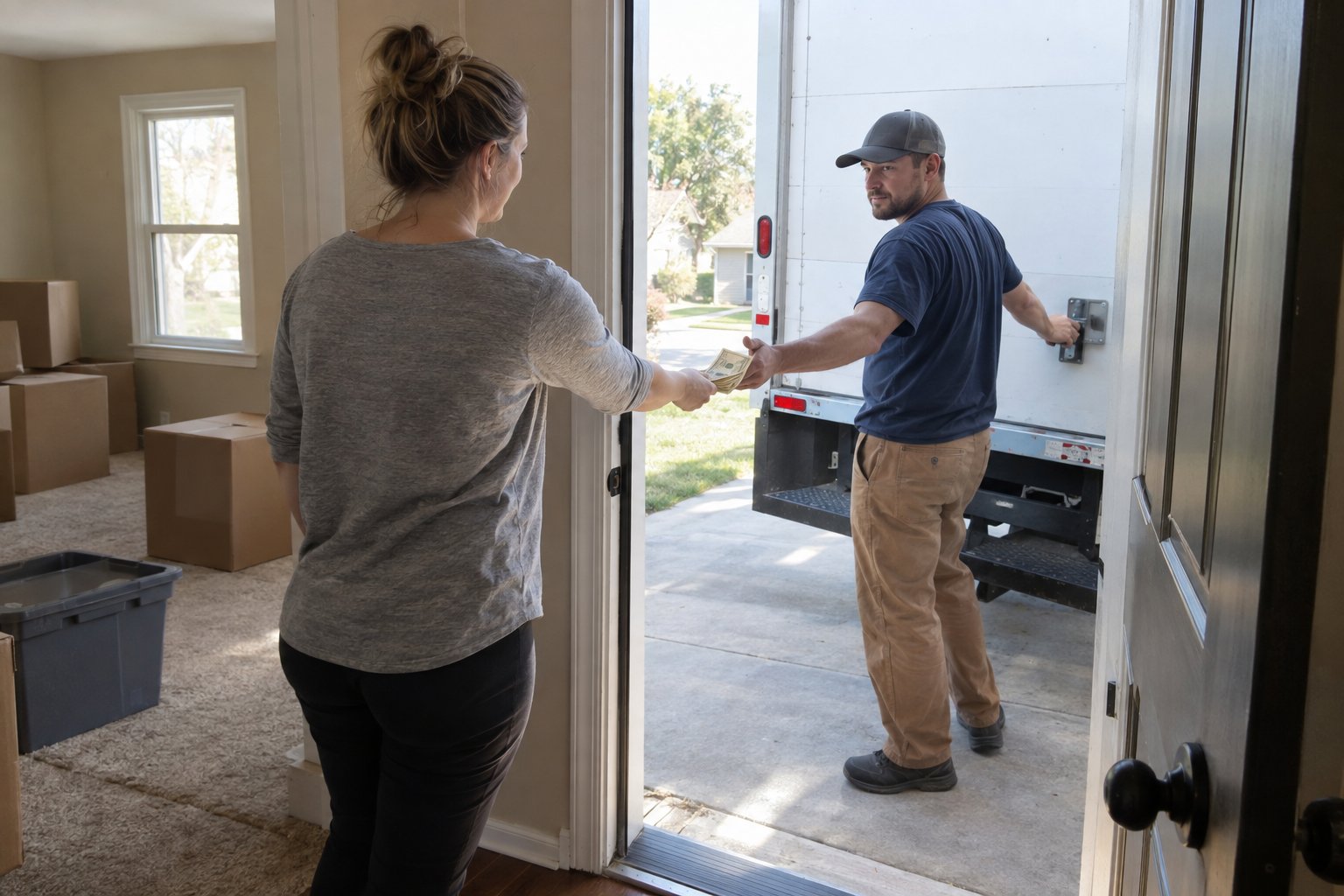
Cash is still the preferred and most reliable way to tip movers, handed directly to each crew member at the end of the job. Many moving companies process card tips through their office rather than passing them straight to the crew, and that can mean a delay or an unclear payout, so cash avoids any ambiguity about who actually gets the money.
If cash truly is not an option, ask your move coordinator directly whether card tips go straight to the crew and how quickly. A reputable company will give you a straight answer, and it is a fair question to ask when you book the move rather than on moving day itself.
Do You Tip Movers Differently for Long-Distance Moves?
Yes, long-distance moves usually involve a different tipping approach because the crew that loads your truck may not be the one that unloads it days later. In that case, tip each crew separately for the work they actually did rather than saving one tip for the very end.
For a long-distance move, a common approach is $20 to $50 per mover at loading, then the same range again at delivery, adjusted for how many hours each stage took and how much of the heavy lifting fell to that particular crew. If the same team handles both ends, as is common with many regional moves, treat it as one job and tip based on total hours and effort. Our guide on long-distance moving costs breaks down how these moves are typically priced, which can help you budget a tip alongside the rest of the bill.
What If You Cannot Afford to Tip Movers?
A tight budget is a legitimate reason to skip or reduce a cash tip, and a professional crew will not treat you differently for it. If you cannot tip in cash, offering cold drinks, a paid-for lunch, or simply a specific, genuine compliment to the company afterward still goes a long way and costs little.
Some customers plan their tip into the total moving budget from the start rather than deciding on the spot. If you are still shaping your overall numbers, our breakdown of how much a moving service costs walks through the line items worth planning for, tips included, before the truck ever shows up.
Signs You Should Tip Above the Standard Range
Tip above the usual range when the crew handled something genuinely difficult without being asked, kept a friendly attitude through a long or frustrating day, or protected your home and belongings with visible care. Movers notice when a customer pays attention to their work, and a slightly larger tip for standout service tends to be remembered and rewarded with the same care on any future job.
If you are booking your first move and want a crew known for this kind of care from the start, our local moving services team can walk you through what to expect on the day, tipping included.